
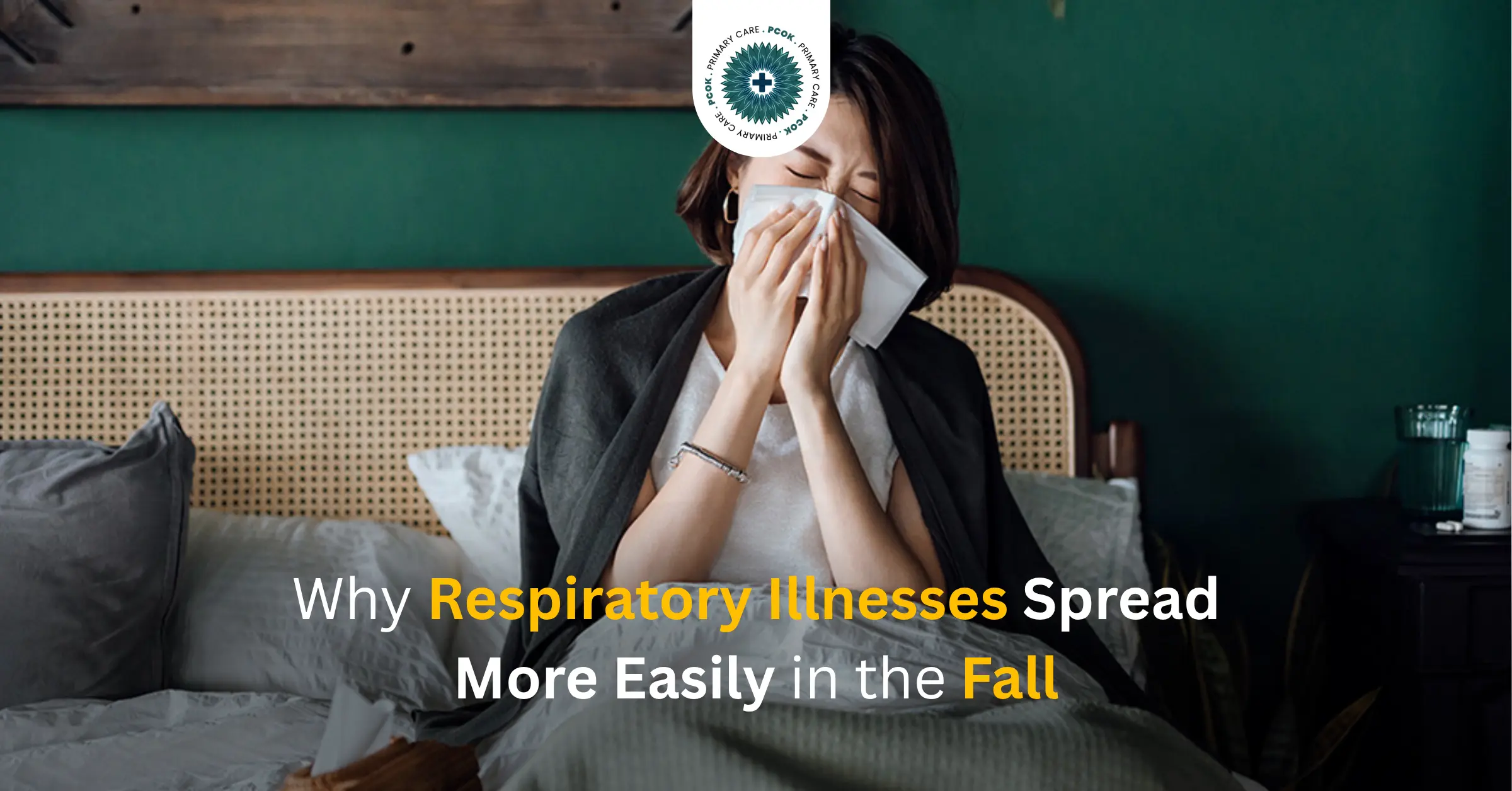
Many people report more coughing, congestion, and other respiratory issues as the weather becomes colder and routines change. Colds, flu, and similar illnesses tend to start picking up in the fall.
Read on to learn why respiratory diseases spread more easily in the fall, what environmental and everyday changes contribute to the increase, and what simple steps you can take to reduce your risk. We want to help you learn more about the season and be better prepared.
How Seasonal Changes Affect the Spread of Respiratory Illnesses
Respiratory viruses thrive under certain conditions. Summer is over, and fall brings a combination of environmental and behavioral changes that allow for more opportunities for these viruses to transmit from person to person.
Cooler weather keeps people inside where less air moves and people are closer together. At the same time, decreased humidity can dry out the protective lining of the nose and throat, allowing viruses an easier foothold. These factors combine to help explain why so many families become sick more often once summer is over.
Knowing these trends might help you decide what prevention measures are right for you, without getting too stressed.
Key Factors That Increase Transmission in Fall
The increase in respiratory diseases this season is driven by several overlapping changes:
More Time Spent Indoors
When it gets cold outside, people will naturally congregate inside their homes, offices, schools, and other public places. In shared air, closer contact allows respiratory droplets and particulates to move more easily between people.
Lower Humidity and Drier Air
The air in the fall is frequently less humid than in summer. Drier conditions can also impair the mucosal membranes that typically assist in catching and eliminating bacteria. When these natural barriers are less effective, viruses may find an easier time establishing infection.
Return to School and Regular Schedules
The start of school and return to more normal work schedules increase the number of everyday interactions. Children and adults have more contact with other individuals, which increases the risk of exposure to circulating viruses.
Changes in Immune Exposure Patterns
In summer, many people are less likely to be in close contact indoors in large groups. As fall habits return, the immune system is exposed to a higher number of possible exposures in a shorter amount of time.
Virus Survival and Circulation
Some respiratory viruses survive longer in cooler, less humid settings. This, combined with more indoor gatherings, makes for easier dissemination within communities.
None of these variables make sickness inevitable. They only show the need for a little more proactive prevention in the fall.
Common Respiratory Illnesses Seen in Fall
Some ailments tend to be more common this time of year. These can include the common cold, flu, and other viruses that infect the nose, throat, and lungs. Symptoms typically overlap and can include congestion, cough, sore throat, weariness, or low fever.
While different viruses might present with similar symptoms, prevention and knowing when to seek care are frequently better than attempting to figure out the specific cause yourself.
Practical Ways to Reduce Your Risk
The best prevention is to make it a habit in everyday life. Here are some ways to help you better protect yourself during the fall:
- Wash your hands often with soap and water, especially after you have been in a public location or among sick individuals.
- Keep indoor air as fresh as reasonably practicable, either by opening windows when weather permits or employing excellent ventilation.
- If you are unwell, stay at home to prevent passing illness on to others.
- Practice good respiratory etiquette, including concealing coughs and sneezes.
- Keep a routine of sleep, nourishment, and hydration to strengthen your immune system.
- Consider seasonal vaccines suggested by your provider.
- Avoid direct contact with people who are sick wherever possible.
Little things, done consistently, can add up to big differences over the course of a season.
Supporting Overall Respiratory Health
Boosting your body’s natural defenses helps, beyond avoiding germs. Staying active in ways that are appropriate for the cooler weather, eating a healthy diet with plenty of fruits and vegetables, controlling stress, and not using tobacco help build greater resilience. If you have asthma, allergies, or other chronic respiratory diseases, fall is an excellent time to reassess your management plan with your provider.
When to Contact Your Primary Care Provider
Most mild respiratory illnesses get better with rest and supportive care at home. Call your physician if you have:
- Symptoms that worsen instead of improving after a few days
- Trouble breathing or shortness of breath
- Fever that is high or prolonged
- Symptoms that interfere with daily activities or sleep significantly
- Existing medical conditions that increase the risk of respiratory infections
- Uncertainty as to whether symptoms warrant medical evaluation
If you have symptoms and need advice or treatment, we can evaluate you at Primary Care of Kansas and help you determine if further evaluation is needed. Getting on top of it early often means faster recovery and greater peace of mind.
Heading Into Fall with Greater Confidence
It’s easier for respiratory illnesses to spread in the fall, for understandable reasons like the weather, indoor gatherings, and daily routines. Most people can reduce their risk and enjoy the season with more ease by identifying these patterns and taking practical prevention steps.
If symptoms arise, we are here to help you with a thoughtful assessment, seasonal recommendations, and personalized care at Primary Care of Kansas. We’re here to work with you, whether you need prevention advice, help managing an illness, or a routine checkup.
If you have questions about respiratory health this fall, or want to schedule a visit, contact us today. A few simple steps now can help you and your family enjoy a healthier season. We look forward to supporting our community along the way.
FAQs
Why do respiratory illnesses seem worse in fall than in summer?
More time indoors and lower humidity, along with more close contact, create favorable conditions for easier spread of many common viruses.
Can I still get sick even if I take all the preventive steps?
Prevention greatly diminishes the risk but cannot completely remove it. The aim is to reduce the chances of illness and to help people recover from illness more quickly.
Are fall respiratory illnesses always viral?
Many are viral, but other reasons can also be at work. Your provider can assist you in figuring things out with your symptoms and history.
Should children and older adults take extra precautions?
Yes. These groups may be more susceptible to complications, and consistent prevention habits and timely medical advice are especially helpful.

No comment