
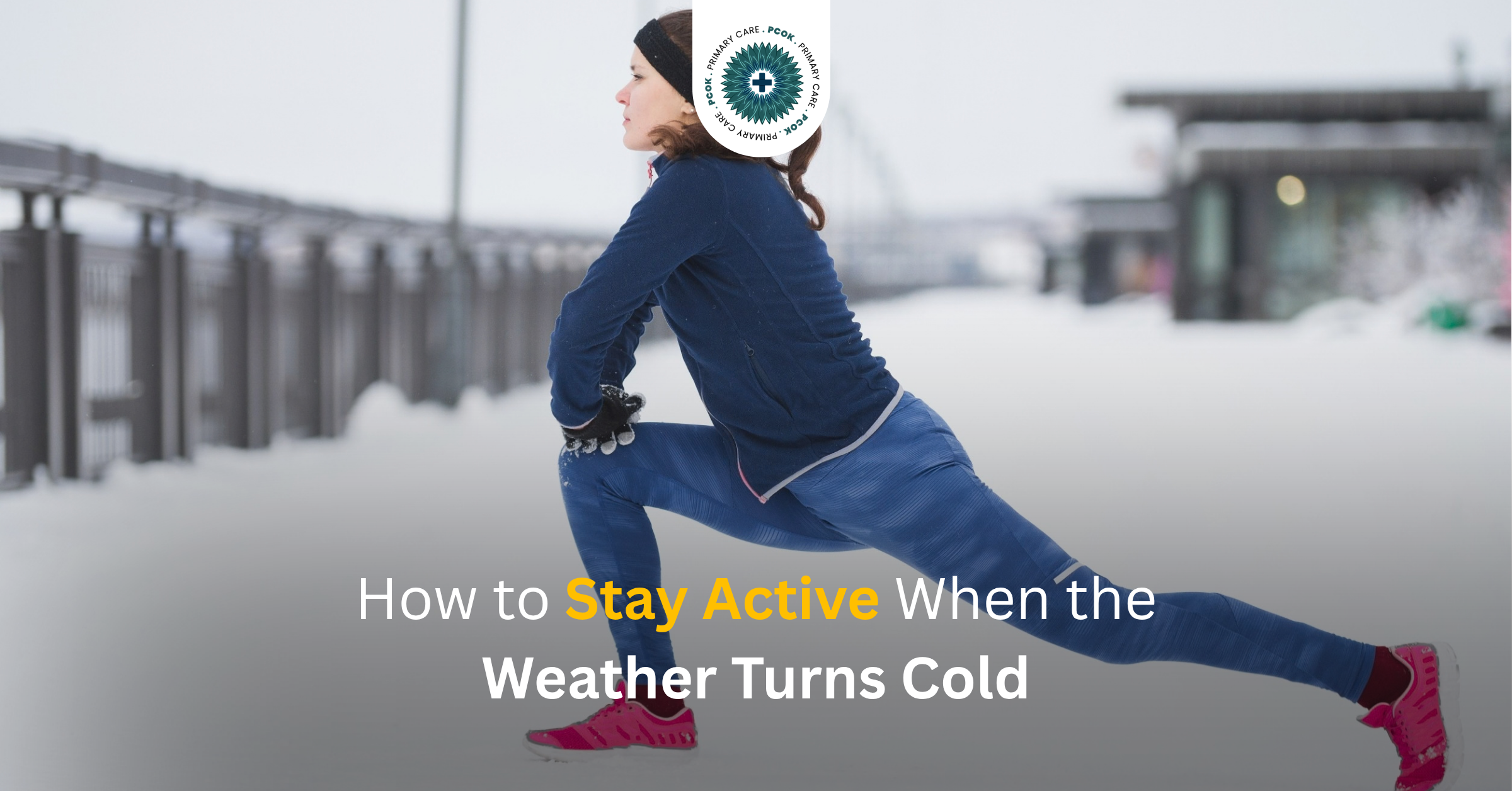
It’s tougher to keep moving your body when the weather plummets and the days shorten. As outdoor walks and summer activities become less interesting, many individuals naturally do less. At Primary Care of Kansas, we often discuss with patients ways to keep moving through the colder months. Regular activity helps with energy, mood, heart health, joint comfort, and overall well-being throughout the year. Read on to learn several practical strategies to stay active while it’s cold outside.
Why Staying Active Still Matters in Cold Weather
The benefits of becoming active don’t take a break for the season. Movement is good for healthy blood pressure, circulation, blood sugar, and joint mobility. It also assists in maintaining energy levels and promotes mental health during months with less daylight and changing patterns.
When you cut activity for long stretches, people can feel stiffer, more tired, or less resilient. The good news is that you don’t need rigorous workouts or perfect conditions to get the benefits. A regular, modest activity appropriate to the season is often all that is needed to keep oneself going and feeling better each day.
Common Challenges That Arise in Cold Weather
Several things make exercising more difficult when temperatures drop:
- Cold air and wind can make outdoor exercise less pleasant
- Shorter days limit outdoor activities in the evening
- Safety concerns over slippery sidewalks or icy situations
- When the rhythm of our life is disturbed, our motivation can be affected
- If you are used to being active outside, being indoors can seem claustrophobic
If you know what they are, you will be better able to plan for them rather than becoming disheartened. With a few adjustments, most people can come up with workable answers.
Practical Indoor Ways to Stay Active
Indoor activity is particularly useful during cold stretches. Little or no special equipment is required for these options:
- Quickly walking around the house, apartment complex, or indoor track
- Bodyweight workouts like wall push-ups, squats, or step-ups
- Movement programs online or recorded (walking videos, beginner strength, yoga or mobility exercises)
- Active housework that gets you moving, like dancing
- Climbing stairs if they are available and safe for you
- Stretching or mobility work to alleviate stiffness from chilly weather
It often works better to have short sessions separated throughout the day than to wait for one lengthy block of time. Even short bursts of activity add up and help you stay consistent.
Staying Safe and Comfortable Outdoors
You may still enjoy numerous cold-weather activities if you’re prepared:
- Wear layers so you can peel off as you warm up
- Wear moisture-wicking fabric next to skin and a wind-resistant outer layer
- Use suitable protective gear for hands, head and feet
- Pick shoes with good traction
- Begin with a shorter route and progressively increase
- Be aware of ice conditions and wind chill
- If you’re exercising alone, let someone know about it
On very cold, windy, or icy days, it is generally better to change to an indoor option. Then you hear the conditions. Listening to conditions keeps activity sustainable rather than risky.
Building Habits That Last Through the Season
Weather is not always cooperative, and motivation alone is seldom enough to continue action. Structure helps:
- Follow a consistent movement schedule
- Associate movement with something you enjoy (music, a favorite show, or a walking buddy)
- Track sessions in a way that feels easy and motivating, not intimidating
- Create a small list of indoor go-to solutions for when you have low motivation or lousy weather
- Focus on how you feel after the move, not perfect execution
It’s more likely that small acts lead to permanent changes than ambitious plans that are difficult to maintain.
Special Considerations for Joint Comfort and Chronic Conditions
Colder weather can mean more stiffness in individuals who have arthritis or injuries. Gentle warm-ups, regular low-impact activity, and no unexpected hard attempts often assist. Activity plans should be checked with a clinician to make sure options are acceptable for those managing blood pressure, blood sugar, heart issues, or respiratory difficulties.
If you are returning to action after a break, or have a health concern, it is often safest to start slowly and build up gradually.
When to Talk with Your Primary Care Provider
Most people can add activity safely with some common-sense changes. See your doctor if you have:
- Discomfort in your chest, unexplained shortness of breath, or dizziness when you exercise
- Pain in joints that gets worse with movement rather than better
- Severe weariness that does not improve with rest
- Asking about the types of activity that are appropriate for your health condition
- A protracted period of inactivity and need for tailored guidance
At Primary Care of Kansas, we can help you think through safe ways to keep active, address any underlying concerns, and make a plan that works for your health needs and lifestyle.
Keeping Movement Part of Your Year-Round Routine
Cold weather doesn’t have to entail long spells of inactivity. With indoor options, careful outside planning, and realistic behaviors, most people can still maintain their health over the winter months. Flexibility and consistency are the keys, not strict expectations.
Primary Care of Kansas is available for your entire wellness, including helping you stay active safely. If you need support with a health problem, better joint comfort, or simply good ideas for your circumstances, our staff is ready to cooperate with you.
If you’d like personalized tips for being active this season, or have concerns about the role of movement and your health, schedule an appointment today. This one action can make you feel more energetic, stronger, and more ready for the months ahead. We look forward to serving you and our community.
FAQs
Do I need a gym to stay active in cold weather?
No. Many effective ways require little or no equipment and may be done at home or in common indoor settings.
Is outdoor exercise safe in cold temperatures?
It can be when you dress correctly, choose safe settings, and listen to your body. Indoor options are frequently better on bad days.
How much activity is enough during the colder months?
Perfection is not as vital as consistency. It is best to undertake frequent moderate activities you can maintain than harsh sessions now and then.
What if I feel less motivated when it gets cold and dark?
That is common. Schedule shorter sessions, plan for indoor options, and track how moving influences your energy and attitude to rebuild momentum.

No comment