
Introduction
Stubborn muscle knots often cause chronic pain, making it difficult to perform daily tasks. Everyday tasks like bending or lifting may become difficult, which can greatly lower a person’s quality of life. This ongoing pain affects both physical and mental health, making conditions like stress and depression worse.
Muscle knots, which are also called myofascial trigger points, are a major cause of long-term pain in the muscles and joints, and limited movement. Pain that doesn’t go away can make it difficult to stay positive.
Trigger point injections are a targeted and minimally invasive way to help, though. The goal of this procedure is to get rid of muscle knots, make it easier to move, and improve your health in general. It’s important to know how the mind and body are connected. Getting rid of physical pain can lower anxiety and greatly improve the quality of life. People who are considering getting trigger point injections for muscle knots or to get their mobility back should know that pain relief can have a big positive effect on their mental health. Clinical studies have demonstrated a significant relationship between chronic pain, depression, and anxiety,with effective pain management capable of disrupting this cycle.
What Myofascial Trigger Points Are
What Are Knots in Muscles?
Myofascial trigger points, also known as muscle knots, are very sensitive areas in a taut band of skeletal muscle. These points form when the muscles are overused, stressed, or injured, and they often feel like hard, bumpy areas under the skin. They can be very sensitive to pressure.
Trigger points are often found in:
- Neck
- Shoulders
- Back
- Legs
People who sit at a desk for long periods of time often get trigger points in their upper back and shoulder muscles.
What makes muscles knot?
Many things can cause muscle knots to form.
The most common reasons are:
Bad posture and repetitive strain: Keeping bad posture or doing the same thing again can put too much strain on muscle fibers.
Emotional Stress: Stress on the mind can cause long-term muscle tension.
Trauma and Underlying Conditions: Acute injuries or medical conditions such as fibromyalgia can lead to trigger points.
Being inactive or working too hard can both cause muscle knots.
Stress plays a big role. Chronic stress can trigger points worse and more painful, creating a cycle of pain and more tension. Anxiety often causes muscles to tense up, demonstrating the link between mental health and musculoskeletal pain.
Signs and Effects on Daily Life
Myofascial trigger points can cause many different symptoms that can make daily life difficult:
Localized and Referred Pain: People may feel pain in the same spot as the trigger point or in a different spot, like headaches that start in the neck.
Stiffness and Limited Range of Motion: Knots can make muscles stiff and joints less able to move.
Systemic Effects: Long-term pain can make it difficult to sleep, make you irritable, and lower your productivity.
These symptoms can have a big effect on mental health, making people feel worn out, frustrated, and low on energy. Because of this, it may be difficult to do everyday things like going to the movies or playing sports with friends.
How muscle knots affect your mobility and mental health
Chronic pain from myofascial trigger points can have a significant impact on a person’s way of life. People may stop doing things that hurt them, like going out with friends or doing something with their bodies. This can make them feel alone, anxious, and depressed.
There is a lot of clinical research that backs up this link. Studies show over and over that chronic pain has a big effect on mental health, raising the risk of anxiety and major depressive disorders. About 40% of people with chronic pain also have these mental health problems. Pain that never goes away is difficult on the body and mind.
On the other hand, treating muscle knots correctly can have beneficial effects on mental health. When you can move better, you can do more physical activity, which releases endorphins, which are the body’s natural mood boosters. This can boost your confidence and give you a sense of physical power, which makes it an important part of a mental health plan that looks at the whole person, not just the pain.
What Are Injections for Trigger Points?
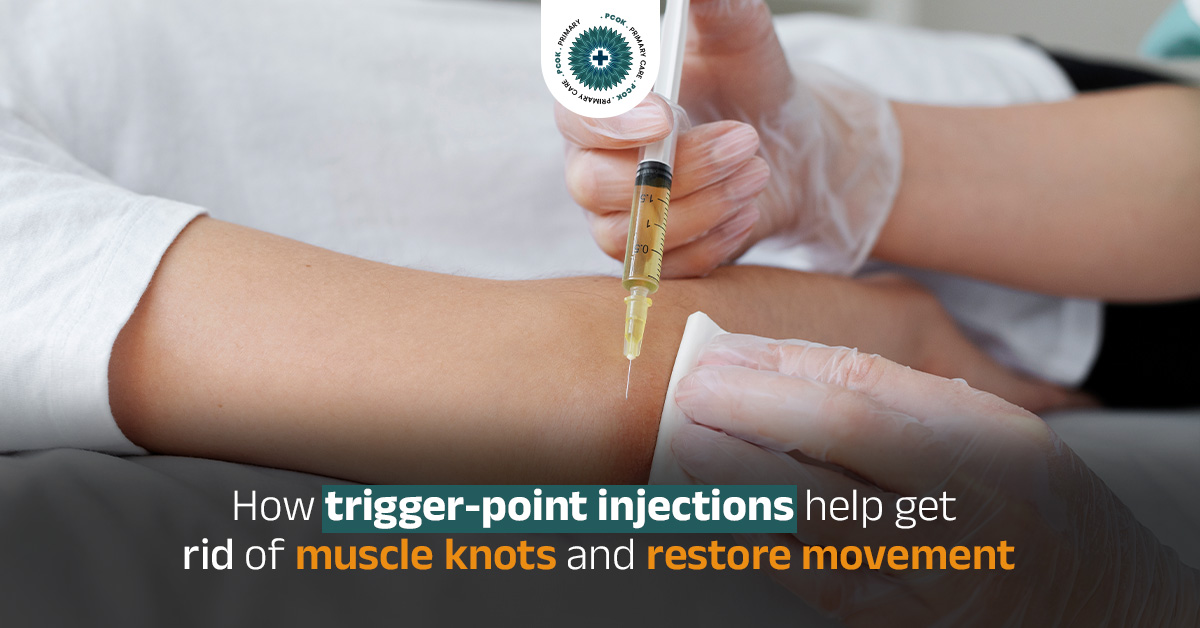
Trigger point injections (TPI) are a medical procedure that helps with myofascial trigger points. The treatment involves putting a substance, usually a local anesthetic, directly into the knot. A corticosteroid may also be added in some cases to help with swelling.
There are two main kinds of injection therapy:
In dry needling, a thin needle is put into the trigger point without any medication being injected.
Wet Needling: This is when a substance, like an anesthetic or steroid, is injected into the body.
In a clinical setting, doctors, pain management specialists, or trained physical therapists usually perform this procedure. For people who are looking into trigger point injections or the different kinds of trigger point therapy, it is a safe and simple outpatient treatment.
How Trigger Point Injections Help Get Rid of Muscle Knots
The Way It Works
The process works in several ways:
- The needle physically breaks up the tight muscle fibers, which breaks up the knot.
- The local anesthetic works right away to ease the pain and help the muscle relax.
- Using a corticosteroid can help for a longer time by lowering inflammation in the area.
- The process increases blood flow to the area, which helps it heal.
- The needle’s mechanical disruption of the trigger point is often enough to release muscle tension and give quick relief.
Restoring Movement with Injections
Trigger point injections can make you much more flexible, strong, and straight by releasing muscle knots. The results are:
- Pain goes away quickly, usually within minutes of the procedure.
- Better range of motion makes it easier to do things like walk, work out, and do everyday tasks.
- Patients are less likely to develop knots in the future, especially when trigger point injections are used alongside other types of therapy.
- Getting back to being able to move without pain is an important step toward getting back to a normal, active life.
Benefits of Trigger Point Injections
Benefits for your body
The main physical benefits of this treatment are:
Quick Pain Relief: Quickly and effectively eases chronic muscle pain.
Better Mobility: Brings back the ability to move and do everyday tasks.
Less Dependence on Medications: May lessen the need for painkillers taken by mouth.
Benefits for mental health
The psychological benefits are just as important:
Less Stress and Anxiety: Getting rid of chronic pain can stop the cycle of stress that comes with it.
Better Sleep: Pain relief often leads to better sleep, which has a direct effect on mood.
Better Sense of Control: Getting back control of your body can help you feel better mentally.
TPI can be used with other family-friendly mental health treatments, like mindfulness or cognitive-behavioral therapy, to help with both physical and mental problems.
A step-by-step guide to the trigger point injection.
The first step in getting ready is a consultation with the doctor, who will look over your medical history and talk about any mental health issues you may have.
While the procedure was going on:
- The doctor finds the trigger point by feeling it or using an ultrasound to guide them.
- The skin around the area is cleaned.
- It usually takes 15 to 30 minutes to give the injection.
- Thereafter, patients should rest, use ice if they are sore, and do gentle stretches. You can make follow-up appointments as needed. For people who want to know what to expect from trigger point injections or a step-by-step trigger point procedure, the process is usually well-tolerated.
- Possible Risks, Side Effects, and Things to Think about.
Most side effects are small and go away quickly. They include:
- Injection-site pain or bruising is are common side effect.
- Short-term dizziness is another common symptom.
- Infections, allergic reactions, or nerve damage are less common but still possible complications. If you have any unusual symptoms, it’s critical to see a doctor. People who are afraid of needles may find that deep breathing and other techniques help. Experts consider the procedure safe when performed by a trained professional.
Who Can Get Better from Trigger Point Injections?
This treatment works very well for people who have chronic pain from muscle knots, such as athletes, office workers, and people who are under a lot of stress.
But not everyone can use it. Not recommended in these cases:
- Bleeding problems.
- Infections that are still going on at the injection site.
- TPI can be a useful part of a complete mental health care plan, like CBT for pain management. It is important to talk to your doctor to find out if this treatment is right for you.
Changes to Your Lifestyle and Complementary Therapies
To get the most out of trigger point injections and keep the benefits going, think about using these methods:
- Physical therapy, massage, and yoga are all types of therapy that can help you move better and keep the problem from coming back.
- Stress Management: Things like meditation can help ease chronic muscle tension.
- Ergonomics and Exercise: For long-term health, it’s important to change the way you work and engage in regular exercise.
Questions that are often asked
How long do trigger point injections work?
The length of relief can vary from person to person and depend on the cause. It can last anywhere from a few weeks to several months. Some patients may need to get more than one injection. Talk to your doctor for more information about the pros and cons of trigger point injections for muscle knots.
Do trigger point injections hurt?
Patients might feel a quick sting during the injection, but it doesn’t take long. Most people think that the pain relief that comes after the discomfort is worth it.
Can trigger point injections help with muscle tension caused by anxiety?
Yes. Injections can help break the stress-pain cycle by relieving the physical pain that comes with muscle tension. This can lead to better sleep and mood.
How many sessions do you need to get your mobility back?
The number of sessions varies, but many patients see a big difference after 1 to 3 treatments. Injections work best when combined with other treatments.
Conclusion
Trigger point injections are a beneficial way to get rid of muscle knots and get your range of motion back. They also contribute to mental health and overall health by targeting the underlying cause of chronic pain.
If you have muscle pain that won’t go away, talk to a doctor to see if trigger point injections are a good choice for you.

No comment