
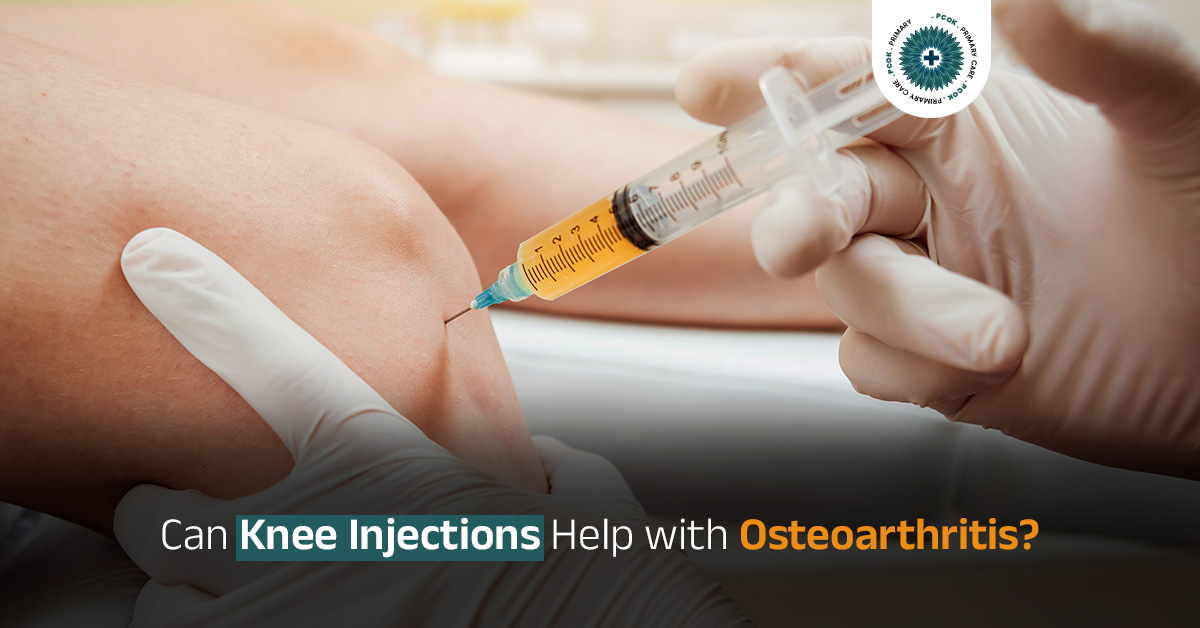
Have you been feeling that familiar ache in your knee lately? It could be the way you stand up or how stairs have suddenly become harder to climb.
If this is osteoarthritis, then probably, beyond the usual advice or another pain pill, you are wondering what options are available for you.
Here’s something worth knowing: knee injections might help. And no, we’re not talking about some experimental treatment.
This approach has been helping people manage knee pain for years.
What’s Actually Going On in Your Knee?
Osteoarthritis, in the simplest terms, is essentially your knee aging.
The cartilage, which normally keeps everything nicely cushioned gradually wears away until eventually bone meets bone. Not a pleasant experience.
You might notice:
- Stiffness (particularly more in the mornings)
- On and off swelling
- Pain that becomes worse with activity
- That grinding feeling
Your knee gets inflamed trying to deal with all this, which just makes everything hurt more. It’s a frustrating cycle.
So What Do These Injections Do?
The idea is to deliver the medication directly to the site of trouble.
Cortisone Injections
These will calm down the inflammation inside your joint.
Most people feel results within a few days. Also, yes, sometimes it lasts weeks or even months! Varies.
Hyaluronic Acid Injections
Normally, gel-like fluid is present in your knee. It helps everything move smoothly. Osteoarthritis dries it up.
These are gel injections, very much similar to the natural lubricant of the joint, which is missing or supposed to be missing due to osteoarthritis.
Pain relief from this treatment can last for six months or more in certain individuals and takes time to build up.
Platelet-Rich Plasma Injections
This is an interesting treatment. It uses your own blood to heal your knee.
Your blood is processed to concentrate the platelets. These are then injected into your knee to reduce inflammation and promote healing.
This treatment is getting much more popular for osteoarthritis and can work well in people who want a “natural” type of treatment.
What Can You Realistically Expect?
Everybody’s different but this is most often the result:
- Less day-to-day pain
- Moving around gets easier
- You might not need as many pain pills
- Activities you’ve been avoiding become doable again
- Surgery? Maybe you can put that off
Here’s something to remember: Injections work better when you’re doing other stuff, too.
A little physical therapy, maintaining a healthy weight, and staying active in gentle ways are all factors that help the injections do their job.
And if you haven’t had luck with physical therapy or oral medications, injections might be exactly what you need.
Is This Something You Should Try?
If you’ve had enough of your knee pain but you’re still not a candidate for surgery, then yes, this is something you should maybe consider.
These work best on knees with mild to moderate osteoarthritis.
Your doctor will want to look at a few things:
- How bad the arthritis is
- Your overall health picture
- What you’ve already tried
- What you want to be able to do
The actual procedure is quick and it’s completed right in the office. You’re usually back to your day pretty quickly.
Get your consultation at Primary Care of Kansas today.
Let’s Talk About Your Knee
Look, knee pain doesn’t have to be something you just live with. At Primary Care of Kansas, we’ve helped plenty of people find relief through knee injections.
Dr. Rashid and his team offer cortisone injections, hyaluronic acid treatments, and PRP injections. All performed with precision and care.
With ultrasound guidance, everything’s accurate and straightforward.
Give us a call at (913) 259-7155 or reach out through our website. Let’s see if knee injections make sense for you.
FAQs
How long does it take?
About 10-15 minutes, then you’re done.
Does it hurt?
Not really. Most people say it’s just a quick pinch. We can numb the area if you’re nervous.
How many do I need?
Depends. Hyaluronic acid might be a series of shots at first.
Will insurance cover it?
Usually, yes. Just double-check with your insurance to be sure!

No comment