
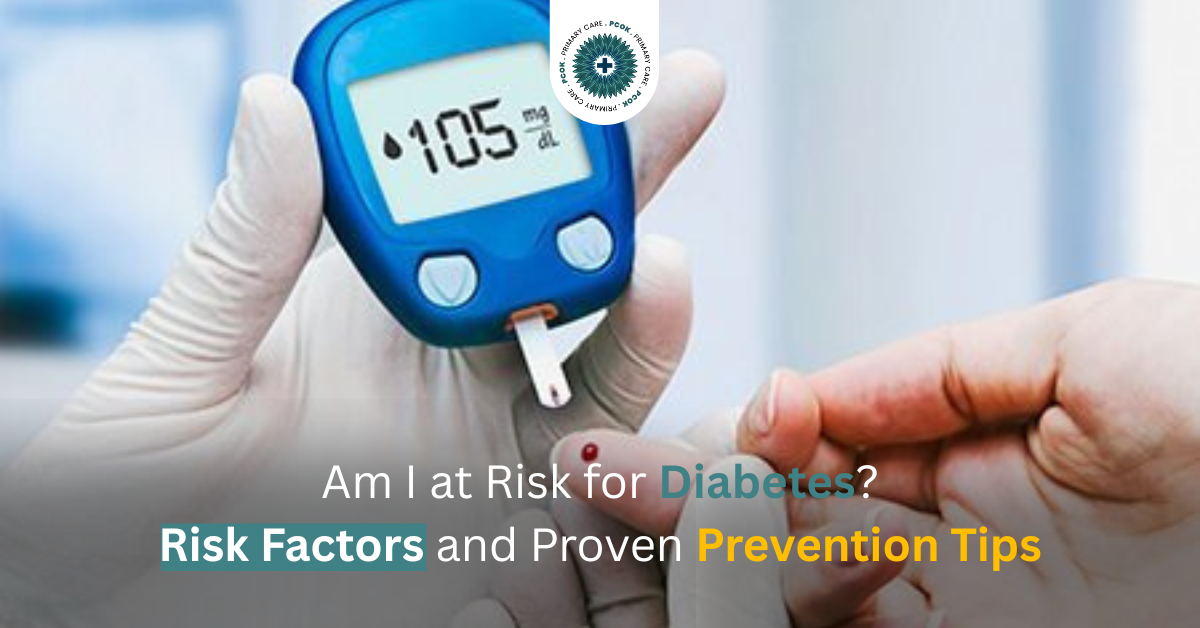
Diabetes can feel overwhelming when you’re concerned about your blood sugar levels and how they affect your body. At Primary Care of Kansas we put your health first. Our team of professionals is here to provide you with both practical and individualized assistance. You can feel more in control and self-assured every day if you know what puts you at risk for diabetes and how to prevent it.
What Does “Being at Risk for Diabetes” Mean?
If you are at risk for diabetes, it doesn’t mean you have it. It means that things in your life or family history make it more likely that you will get type 2 diabetes. By learning about these risk factors and making small changes, you may be able to lower your risk of developing diabetes and protect your long-term health.
Why Knowing Your Risk Matters
If you don’t take care of your diabetes, it could hurt your heart, eyes, kidneys, and nerves. Knowing your risk helps you act quickly so you can:
- Keep an eye on your blood sugar levels
- Make it less likely that significant problems will happen
- Avoid frequent visits to the hospital too much
- Every day, feel better about yourself
Taking action now to prevent problems is a great way to stay healthy and enjoy life without constantly worrying.
Key Risk Factors for Diabetes
Everyone has a different amount of risk. You can’t change some risk factors, but you can change others completely.
1. Family history and DNA
- If you have a parent or sibling with diabetes, your risk goes up.
- Some ethnic groups, such as African Americans, Hispanics, Native Americans, Asian Americans, and Pacific Islanders, are more likely to get it.
2. Age and Weight
- The risk rises after age 45.
- If you are overweight, especially around the waist, your risk goes up.
3. Lifestyle
- Not being active or living a sedentary lifestyle makes blood sugar levels go up.
- Eating a lot of sugar, processed foods, and fried foods raises your risks.
4. Health Problems
- If you have high blood pressure, high cholesterol, or prediabetes, something is wrong.
- Having had gestational diabetes (diabetes during pregnancy) in the past also raises the risk.
- Also, women who have given birth to a baby weighing more than 9 pounds (macrosomia/large for gestational age), face a higher risk for type 2 diabetes.
- Non-alcoholic fatty liver disease (NAFLD) which results from a buildup of fat in the liver not caused by alcohol, is also recognized as a risk factor for type 2 diabetes.
5. More Factors
- Diabetes is more likely to happen if you have trouble sleeping, are under a lot of stress for a long time, or smoke.
Proven Tips to Prevent Diabetes
Even if you have risk factors, you can still stay healthy and prevent diabetes. Our team will help you figure out the steps to reach your goals.
1. Move Your Body
- Aim for at least 150 minutes of moderate exercise each week, like walking, swimming, or biking.
- Even after short walks, your body uses sugar better.
2. Eat Well
- Eat a lot of whole grains, fruits, vegetables, and lean protein.
- Eat fewer sugary drinks, fried foods, and processed snacks.
- Picking the right foods is just as important as keeping an eye on how much you eat.
3. Maintain a Healthy Weight
- Research from the CDC and the Diabetes Prevention Program shows that losing 5-7% of your starting body weight through healthier eating and regular activity can reduce your risk by up to 58% (and even more, up to 71% for people over age 60).
- Eat well and stay active to get results that last.
4. Monitor your Well-Being
- Be sure to get regular checkups and blood sugar checks.
- Pay attention to your weight, cholesterol, and blood pressure.
5. Manage sleep and stress.
- Chronic stress and sleep deprivation may raise blood sugar levels.
- Try practicing mindfulness, relaxation techniques, or simply making sure you get between seven and eight hours of sleep each night.
6. Avoid smoking
- Smoking increases the risk of developing type 2 diabetes and other serious illnesses.
How Primary Care of Kansas Helps Prevent Diabetes
We can help you lower your risk in a personalized way:
- Personal help to figure out your own risk factors
- Tips that you can use right away to change your way of life
- Easy ways to stay fit, eat well, and deal with stress
- Check in regularly to see how things are going and make changes
We provide comprehensive diabetes education so that patients can learn to manage their diabetes and reduce the risks of complications.
Meet Our Team
Our team at Primary Care of Kansas cares about your health. We help people of all ages and backgrounds, and we build long-term relationships to understand their lives and needs better. Dr. Saboor Rashid is in charge of our diabetes and preventive care programs. He has been working in the field for many years and is committed to helping patients take control of their health and live better lives.
Taking the First Step
You don’t have to handle this by yourself. You might be able to live a better, fuller life if you know how likely you are to get diabetes and do things to avoid it. We’ll be there for you every step of the way.
Are you ready to be in charge of your health? Call Primary Care of Kansas today to make an appointment for your own diabetes risk consultation.
FAQs
How often do I need to get tested for diabetes?
Guidelines from the American Diabetes Association (ADA) and U.S. Preventive Services Task Force (USPSTF) recommend screening for prediabetes and type 2 diabetes in adults with risk factors (such as overweight/obesity, family history, or age 35+).
Can I prevent diabetes even if it runs in my family?
Yes! You can significantly reduce your risk by making lifestyle changes, such as eating well, exercising, and seeing your doctor regularly.
Do small changes really make a difference?
Yes, for sure. You can lower your risk by doing small things like walking for 20 minutes every day or drinking less sugary drinks.

No comment