
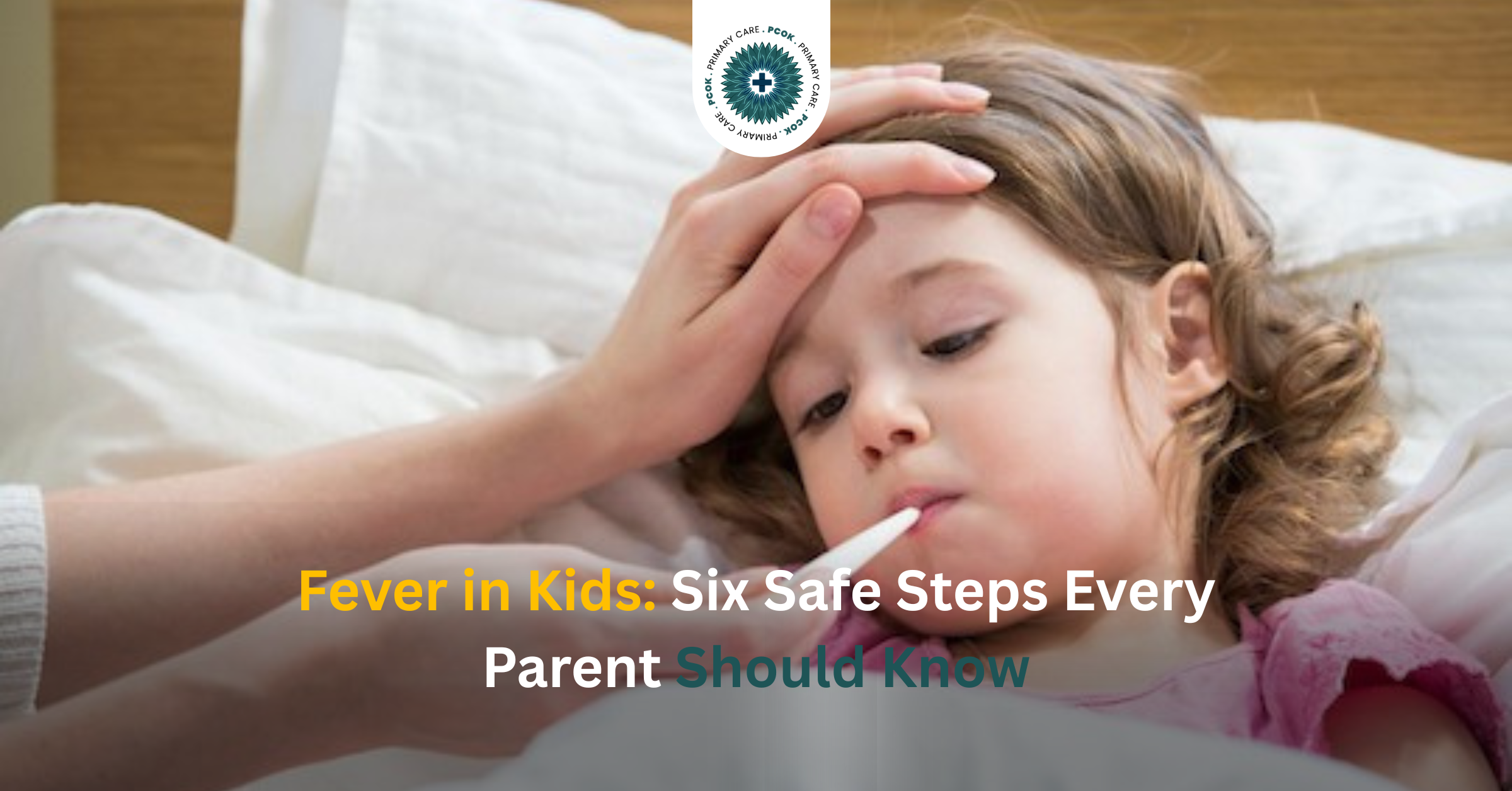
Your toddler wakes up at 2 a.m. feeling hot and cranky. You check their temperature, and your fear is confirmed: they have a fever. Every parent has felt that familiar surge of dread, yet most fevers in kids are only the body’s method of fighting off diseases.
If you know how to carefully handle a child’s fever in the first 24 hours, you can relax, and your child will get better faster. Instead of second-guessing or rushing to the emergency room, you can count on a trusted pediatric primary care provider to be your partner who knows your child’s health history and can help you right away.
Read on to learn six safe ways to manage a toddler’s fever, see the warning signs you shouldn’t ignore, and get useful suggestions on how to keep your child healthy.
Understanding Fever in Kids: What Parents Should Know
How Fever Works in Children
A fever is like a built-in thermostat for your child. When viruses get into the body, the brain boosts the temperature to slow them down and give the immune system a better chance to combat the infection.
Even a low-grade fever in a newborn or baby under 3 months old needs to be monitored closely. For older kids, the main things to think about are comfort, hydration, and behavior.
Common Fever Triggers
- Getting viruses from daycare or school
- Vaccinations that were given recently
- Mild inflammation in the ear or throat
- Teething, which can occasionally come with a mild fever
Parents can stay calm instead of panicking if they can see these patterns.
6 Safe Steps to Handle Fever on Day One
Step 1: Pause, Breathe, and Assess Your Child
Before you look at the thermometer, pay attention to how your child acts in general. Are they awake, drinking fluids, or playing a little?
- Use the right type of thermometer for the right age: rectal for babies, oral/ear for toddlers, and forehead for rapid checks.
- Get older siblings involved in a gentle way, such as putting a cool cloth on their forehead.
Step 2: Make Fluids the Hero of the Day
Giving your child fluids will help their body fight off a fever. Give tiny quantities often:
- Solutions of water or electrolytes
- For babies, breast milk or formula
- Kid-friendly options: Diluted juices, flavored ice pops, and smoothies
Look for indicators of hydration, like wet diapers, tears when sobbing, and getting your energy back.
What if your child refuses to eat or drink?
- Instead of drinking a lot at once, offer small quantities often
- Giving cups, straws, or drinks that are familiar to them
- If plain drinks don’t seem good, try ice chips or popsicles (in small quantities to keep them hydrated, avoid them in case the kid also shows symptoms of a cold)
- When they are ready to eat, give them plain, simple things like toast, crackers, applesauce, or soup
Red flags: Have not urinated in 6 to 8 hours, have excessively dry lips or mouth, feel tired, or dizzy, call your primary care doctor right away.
Step 3: Create a Cozy Comfort Zone
Make your youngster feel at ease without changing their temperature too much:
- Dress in light layers
- Make the room a little cool
- Give them blankets, turn down the lights, and let them engage in calm activities (reading or being read to, coloring, gentle play with stuffed animals)
Avoid cold showers, apply alcohol to your skin, or bundle up too tightly; these things can increase discomfort.
Step 4: Use Fever Medicine Thoughtfully
Medication can be used to improve comfort, not eliminate the fever. A fever itself is not harmful in many cases, as it is the natural way of the body to fight infections.
- Give acetaminophen or ibuprofen based on weight, not age
- Don’t ever give kids aspirin
- For optimal benefits, combine with water, rest, and comfort
When in doubt about the right dosage or which medicine is safest for your child, call your primary care provider.
Step 5: Watch Behavior, Not Just the Thermometer
Behavior often shows more than just the temperature:
- Are they talking to you, smiling, or doing anything else?
- Write down your child’s energy level, how much they drink, and any new symptoms in a journal or on your phone.
Coloring, puzzles, or quiet shows might help keep the day tranquil.
Step 6: Contact Your Primary Care Team Early
If you’re not sure, call your child’s primary care provider.
- Visits or calls on the same day can help you avoid extra stress
- Doctors can provide you with gentle checkups and advice
- Primary Care of Kansas has minimal wait times and a team that is experts in pediatrics.
When to Call Your Doctor: Red Flags
If you see any of the following, call your child’s doctor right away:
- Any fever in babies under 3 months
- Trouble breathing or breathing too quickly
- Being very fussy or sleepy
- Signs of dehydration (few wet diapers, no tears)
- A new rash or unusual symptoms
- Fever after traveling or exposure to illness
Bonus Tips for a Smoother Fever Day
- Get older siblings involved in gentle ways to help lower stress in the house
- Have a home comfort kit that includes a thermometer, medicines, ice pops, and a notebook
- Talk to everyone in a calm voice and tell them that a fever is a normal aspect of the body’s defense
How Primary Care Supports Fever Management
Regular visits to the doctor for your child are very important:
- Track growth and development
- Review health history and vaccines
- Work together with your provider to find out what works best for your child
Find out more about wellness exams and pediatric care at Primary Care of Kansas.
Prevention Strategies
To ensure kids’ safety and health, establish consistent routines like:
- Regular sleep patterns
- A diet that includes fruits and vegetables
- Fun ways to wash your hands
- Regular well-child checkups
These methods boost your child’s immune system and may make future fevers less severe or less frequent.
Conclusion
Taking care of a child’s fever means:
- Staying calm
- Putting comfort and hydration first
- Not just looking at the temperature, but also noticing their behavior
- Knowing when to get in touch with your primary care team
Most of the time, fevers go away on their own. You might feel better and less anxious with a simple approach.
Call or make an appointment with Primary Care of Kansas in Gardner on the same day if your child has a fever or if you want a plan for next time.
FAQs
When should I call the doctor for my child’s fever?
Babies under 3 months, trouble breathing, dehydration, being very fussy, or having a fever that won’t go away.
How can I tell whether my child is well-hydrated during a fever?
Look for wet diapers, tears when the baby cries, and some energy coming back.
How do visits to the doctor for a healthy child help in managing a fever?
They keep track of your child’s growth, give them new vaccines, and make a plan for what to do if your child gets sick.

No comment