
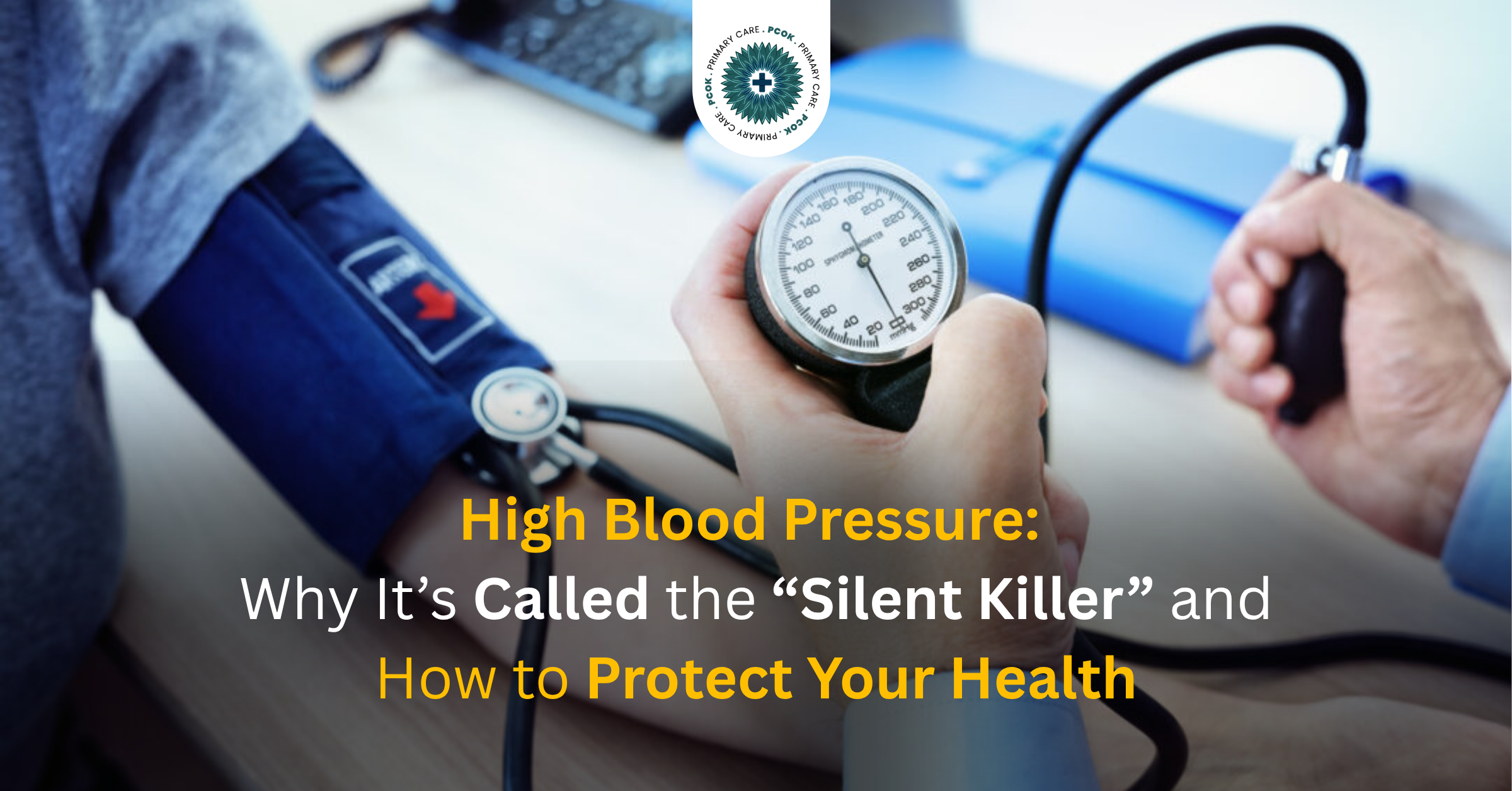
High blood pressure is one of the most prevalent health conditions individuals have, but many people go for years with high blood pressure without knowing something is wrong. We see patients at Primary Care of Kansas routinely who are shocked to find they have high numbers during a routine visit. This is precisely why high blood pressure is called “the silent killer.”
We’ll discuss what this nickname truly means, how high blood pressure impacts the body over time, and what you can do practically to preserve your long-term health. We want to give you clear and helpful information to increase your confidence in understanding and managing this disease.
Why High Blood Pressure Is Called the “Silent Killer”
Most health disorders have clear warning symptoms. Hypertension is another story. It develops and worsens without obvious signs in most cases. People often feel perfectly normal, although the illness is silently adding extra strain to the heart, blood vessels, kidneys, and brain.
Because there normally aren’t any early red signs, many people only find out about the issue at a routine exam or when a more serious concern crops up. That lagging awareness is also what makes high blood pressure so harmful when it goes untreated. The longer the high blood pressure goes untreated, the greater the chance of permanent injury.
We need to understand this silent nature before we take it seriously, even when we are feeling well.
What High Blood Pressure Actually Means
Blood pressure is a measure of the force of blood on the walls of your arteries while your heart pumps. That pressure remains high for too long, and the arteries and organs begin to pay the price.
Diagnosis is usually made based on repeated readings across several visits rather than a single reading. Your primary care provider looks at the whole picture and your particular health history to determine if treatment or more frequent monitoring is warranted.
High blood pressure can occur by itself or with other illnesses such as diabetes, high cholesterol, or being overweight. Often it develops slowly, because of a mix of lifestyle variables, family history, and age-related changes.
How High Blood Pressure Affects the Body Over Time
Chronic high blood pressure puts a strain on the cardiovascular system even if there are no symptoms. Arteries can become inelastic. The heart has to work harder to pump blood. Over time, this extra workload increases the likelihood of more serious disorders, such as heart disease, stroke, kidney problems, and changes to your eyesight.
The good news is that this process is generally preventable or controllable. If you catch it early and have regular care, it makes a big difference in staying healthy in the long run. Many people can maintain their blood pressure in a safer range with a mix of lifestyle adjustments and, when needed, medication.
Common Factors That Raise the Risk
Several elements can contribute to elevated blood pressure. Some are within your control, while others are not:
- Family history and genetics
- Age-related changes in blood vessels
- Excess body weight
- High-sodium eating patterns
- Limited physical activity
- Chronic stress
- Smoking or tobacco use
- Certain medical conditions or medications
Knowing these things helps you and your provider design a more tailored plan. Often, small, consistent gains in a few areas will yield better outcomes than trying to focus on one change.
Practical Ways to Protect Your Health
The best way to deal with high blood pressure is to engage with your health care team over the long term. Many patients find these approaches helpful:
Monitor Regularly
Knowing your numbers is powerful stuff. When used properly, home blood pressure monitors can provide helpful information in between visits. Bring your readings to appointments so your provider can see the whole picture.
Focus on Everyday Eating Habits
Getting rid of excess salt, eating more vegetables, fruits, and foods in their natural state, and paying attention to portion sizes help lead to healthy blood pressure. What counts are the improvements you make to your life.
Stay Physically Active
The heart and blood vessels work more efficiently when you walk often. Activities like walking, swimming, or other moderate exercise that suits your fitness level are good starting places. Intensity is not as crucial as consistency.
Manage Stress and Sleep
Chronic stress and sleep problems might affect blood pressure. Regular routines, relaxing techniques, and prioritizing rest are simple behaviors that can enhance general cardiovascular health.
Avoid Tobacco and Limit Alcohol
Tobacco destroys blood vessels and elevates blood pressure. Some people may find it easier to have greater control if they restrict alcohol intake.
Follow Your Treatment Plan
Taking a given medication as directed is one of the best methods to preserve your health. Never stop or alter doses on your own; talk with your provider about any concerns.
When to See Your Primary Care Provider
The best approach to find out whether you have high blood pressure early is to get regular checks. You should also plan a visit if:
- You have a family history of hypertension or heart problems
- You have new symptoms such as bad headaches, eyesight problems, chest pain, or unexplained shortness of breath
- You have other illnesses that raise your cardiovascular risk
- You want advice on medication options or lifestyle adjustments
At Primary Care of Kansas, we adopt a personalized approach. We evaluate your history, assess your blood pressure carefully, discuss your lifestyle, and build a strategy that meets your needs and goals. We focus on prevention, education, and continuing assistance so you may stay healthier longer.
Taking Charge of Your Heart Health
High blood pressure might be silent, but it doesn’t have to be overlooked. Most people can lower their risk of problems and safeguard their long-term health significantly via regular monitoring, sensible lifestyle changes, and the correct medical care.
We at Primary Care of Kansas in Gardner want to help our patients understand and manage their blood pressure and feel confident about their care. If you require a routine checkup, advice on lifestyle modifications, or continuous care, our staff is here to partner with you.
If it’s been a long time since your blood pressure was checked, or you have concerns about your heart health, make an appointment now. This small step can make a long-lasting difference. We look forward to continuing to help you and our community stay healthy for many years to come.
FAQs
Can I feel high blood pressure?
Most individuals cannot feel it. That’s why regular screening is so vital even if you feel well.
Is high blood pressure permanent?
Some achieve reduced and controlled numbers through lifestyle changes and treatment. It typically needs to be managed on an ongoing basis to keep it at a healthy level.
Do I need medication right away?
Not necessarily. Some people get better on lifestyle adjustments alone, particularly when the elevation is low. Your physician will assist in deciding what technique will work best for you.
How often should blood pressure be checked?
That depends on your existing numbers, age, and overall health. Your primary care provider can help you choose a schedule that works for you.

[…] associated with pregnancy such as high blood pressure or gestational […]