
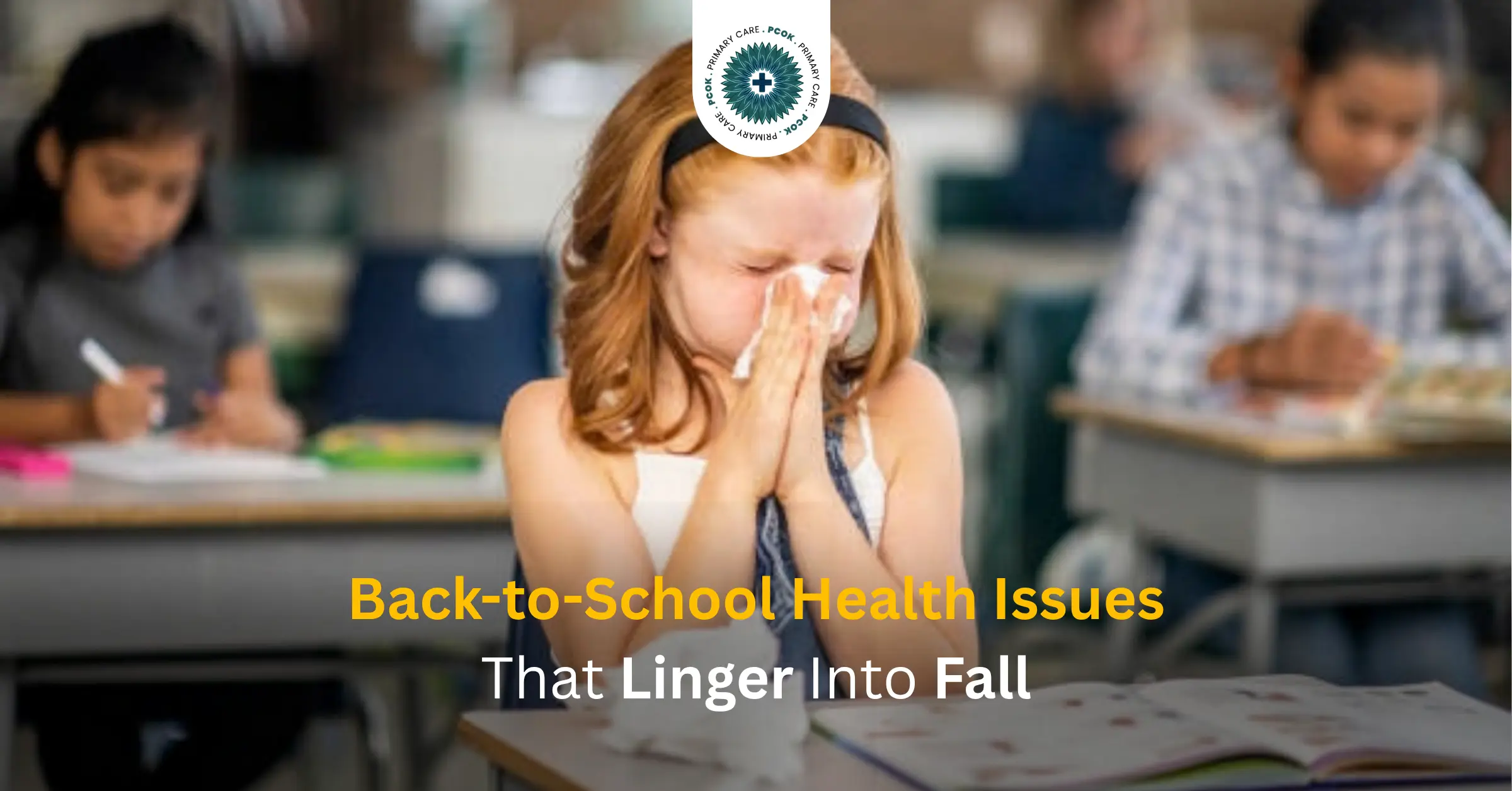
The start of a new school year brings excitement, new routines, and plenty of activity. It can also cause or exacerbate some health problems that don’t always pass when September changes into October. At Primary Care of Kansas, we encounter families coping with concerns that commonly come up as summer ends and the back-to-school season begins and moves into the fall.
Here, we’ll go over common health problems that tend to arise when school starts, why they happen, and what parents and caregivers can do to help children cope with them. Our goal is to help you detect patterns sooner and respond with confidence.
Why Some Back-to-School Health Issues Continue into Fall
The return-to-school transition is about more than academics: Kids go from unstructured summer schedules to regulated days, more close contact with classmates, altered sleep patterns, and increased demands on energy and focus. And these changes create situations where some illnesses and stress-related issues can come in and stay.
Cooler weather, more time indoors, and continued exposure in classes and activities further contribute to the persistence of some illnesses. Understanding this overlap between the start of school and the arrival of fall can assist families in staying on the proactive side, not the reactive side.
Common Health Issues That Often Linger
Back-to-school season often signals the start or escalation of many worries that persist throughout the fall months:
Respiratory Illnesses and Lingering Coughs
Colds and other respiratory diseases spread more easily when people are in close contact in classes and groups. A few youngsters will cough or be congested, slowly improving, especially with repeated new exposures.
Sleep Disruption and Fatigue
Summer flexibility for bedtimes sometimes clashes with earlier school start times. Many youngsters have difficulties adjusting and get weary, have problems concentrating, or experience changes in mood that last for weeks.
Stress, Worry, and Adjustment Challenges
New teachers, social dynamics, academic demands, and the disruption of regular summer patterns might leave lasting uneasiness or anger. Sometimes these feelings are clearer once the excitement of the new year wears off.
Allergy Flare-Ups
Sensitive children may experience prolonged or worsened nasal congestion, itchy eyes, or difficulty breathing due to the combination of fall allergens plus dust and indoor irritants in the school environment.
Skin Concerns
Shared equipment, changing weather, and changes to hygiene regimens can cause dry skin, eczema flares, or mild irritations that may continue into the cooler months.
Nutrition and Energy Ups and Downs
Skipping meals, rushing through the morning, or snacking on the fly can take its toll on energy levels and overall well-being as the season develops.
Minor Injuries or Overuse Discomfort
In terms of physical education, returning to sports and active activity may cause strains or aches that linger without sufficient rest and healing.
These are typical difficulties, and usually solvable, but they take attentive care and should not be overlooked as “just part of the school year.”
Practical Ways to Support Children Through Lingering Issues
Consistent, supportive habits at home can make a meaningful difference:
- Re-establish steady sleep and wake times, allowing a gradual wind-down in the evening
- Encourage regular handwashing and basic hygiene to reduce illness spread
- Pack balanced lunches and snacks that provide steady energy
- Create calm after-school routines that include downtime
- Watch for patterns in symptoms and note what seems to help or worsen them
- Keep open, low-pressure conversations about school stress or social concerns
- Maintain age-appropriate physical activity while allowing rest when needed
- Use a humidifier if indoor air feels dry and contributes to congestion or skin dryness
Small adjustments applied consistently often help symptoms ease more effectively than waiting for them to resolve on their own.
When to Reach Out to Your Primary Care Provider
Most of the remaining problems get better with time and supportive care. Call your child’s doctor if you notice:
- Symptoms that get worse or do not improve in a reasonable length of time
- Persistent tiredness that interferes with school or activities
- Shortness of breath, a fever that doesn’t go away, or major changes in appetite or mood
- Sleep problems even with consistent routines are severe
- Changes in behavior or anxiety that affect daily living
- Any concern that makes you wonder what to do next
At Primary Care of Kansas, we take a careful look at school-age health concerns. We can help by assessing symptoms, ruling out contributing factors, giving practical advice, and arranging further support if needed. Early attention often means quicker relief and more peace of mind for children and parents alike.
Helping Your Child Move Through the Season with Greater Ease
Many families have back-to-school health problems that carry into fall. By identifying the trends, promoting healthy routines at home, and being aware of when to get expert help, parents can help their children cope with the season more easily.
At Primary Care of Kansas, we’re here to collaborate with families during these transitions. Our team provides sensitive, tailored care whether you require evaluation for ongoing symptoms, help with sleep or stress, or reassurance.
If your child is experiencing health problems that began around the beginning of school, or that have lasted into the autumn, we invite you to make a visit. Addressing these difficulties early can lead to better comfort, focus, and overall well-being in the months ahead. We look forward to helping your family stay healthy this season and for years to come.
FAQs
Is it normal for kids to stay tired for weeks after school starts?
Some adjustment fatigue is to be expected, especially with schedule changes. If the fatigue is persistent or severe enough to affect mood or performance, it warrants further evaluation.
How can I tell if a lingering cough needs medical attention?
Usually, a cough that is gradually disappearing is just part of the healing process. If it gets worse or makes it harder to breathe, or if it sticks around and doesn’t seem to be getting better, have it checked out.
Can stress from school really affect physical health?
Yes. Stress can affect sleep, appetite, energy, and even immune resilience. It also helps treat the mental and physical aspects.

No comment