
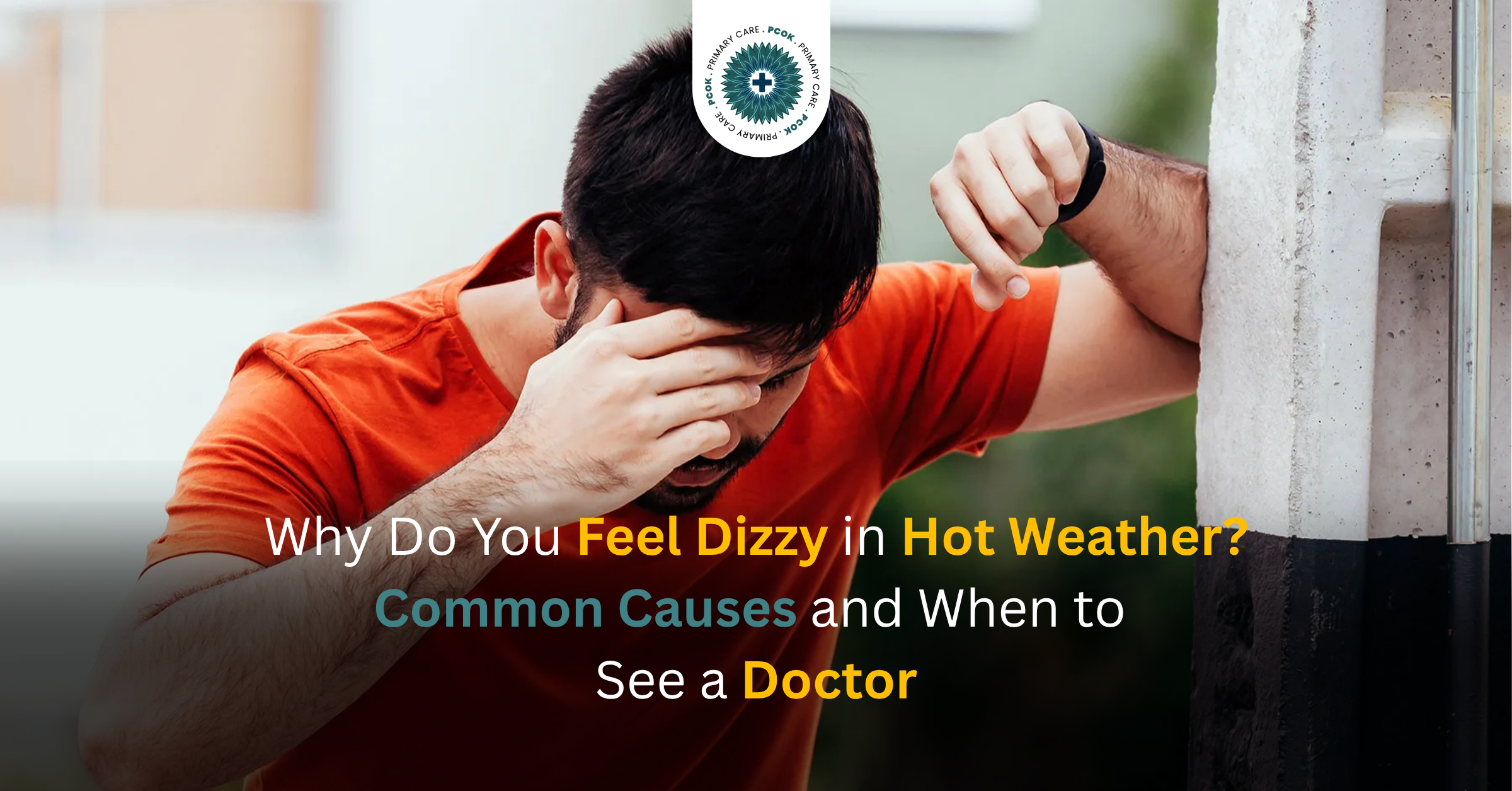
Hot summer weather can sometimes leave you feeling lightheaded, dizzy, or unsteady. While this is often your body’s natural response to heat, it can also signal dehydration or another underlying issue.
At Primary Care of Kansas, we’re here to help you understand what causes heat-related dizziness, how to prevent it, and when it’s time to seek medical care.
Understanding Why Heat Can Make You Feel Dizzy
Your body works hard to keep its internal temperature stable, particularly when it’s hot outside. This is part of a process called thermoregulation, where we cool down by sweating, opening up blood vessels to release heat, and changing blood flow. These changes are real, but can sometimes leave you feeling a little off balance.
When it is hotter, your body brings more blood to your skin to help cool you off. At the same time, sweating causes loss of fluid. If fluids are not replaced quickly, blood volume can drop a little, so temporarily, there is less blood going to the brain. The decreased flow often presents as lightheadedness or dizziness. Humidity makes it worse as sweat doesn’t evaporate as efficiently, so your cooling system has to work even harder.
These effects are usually temporary and directly related to the conditions of the environment, but can be alarming if you are not expecting them.
Common Causes of Dizziness in Hot Weather
Several everyday factors can contribute to feeling dizzy when it’s hot. Knowing them helps you take better care of yourself.
Dehydration is a major reason. Sweating draws water and vital minerals from your body. If you lose more fluid than you take in, you have thicker blood that doesn’t circulate as well. This can be made worse by standing up quickly from a sitting or lying position, as this can cause a brief drop in blood pressure, leaving you feeling faint.
Also, a major factor is changes in the blood vessels and low blood pressure. When you get hot, blood vessels close to the surface of the skin expand to release heat. This natural response can help to bring down blood pressure overall, especially if you’re already a little dehydrated. This can often cause a feeling of dizziness or lightheadedness, especially when you change positions.
When your body can’t take the heat, you may experience heat exhaustion. You may also experience heavy sweating, fatigue, muscle cramps, nausea, a rapid heartbeat, and dizziness. It’s your body saying it needs to chill out from the heat and drink more water.
Other causes include medications that influence fluid balance or blood pressure, pre-existing conditions such as heart problems, or just being in the sun for long periods of time without enough rest or shade. It can be the same if you have poor air circulation in an indoor environment during a heat wave.
Who Is More Likely to Experience Dizziness in the Heat?
Hot weather can make anyone dizzy, but some people are more prone to it. Older adults are often less able to regulate body temperature and may be on medications that increase risk. Young children, athletes, outdoor workers, and people with chronic conditions such as diabetes or heart problems also need to take extra care.
Knowing the early signs can make all the difference if you’ve had dizziness before, live in a hot climate, or are out in the direct sun.
Related Read: Can Hot Weather Raise or Lower Blood Pressure?
Practical Tips to Prevent and Manage Dizziness in Hot Weather
The best way is prevention. Here are a few simple habits to help you enjoy summer without the spins:
Stay ahead of dehydration: Drink water throughout the day, even when you don’t feel thirsty. Cool water or electrolyte drinks can be particularly helpful after sweating. Cut back on caffeine and alcohol, which can increase fluid loss.
Wear smart clothes and stay in the shade: Wear light, loose-fitting, light-colored clothes. Take frequent breaks in air-conditioned rooms or shaded areas, particularly during the hottest part of the day.
Walk mindfully: Stand up slowly from sitting or lying down. Let your body get used to it for a moment. Then walk.
Eat light, nutritious meals: Choose foods that naturally contain electrolytes, such as fruits, vegetables, and yoghurt. Avoid heavy, hot foods that can create internal heat.
Cool down properly: You can use fans, cool cloths on the neck or forehead, or take a quick cool shower when needed. Don’t dismiss early dizziness. Stop what you are doing and rest in a cooler place right away.
Make a plan to avoid the heat: Do outdoor chores in the early morning or evening when it is cooler.
These little changes add up to big protection for your body during Kansas summers.
When to See a Doctor for Dizziness in Hot Weather
Most lightheadedness caused by heat will resolve with rest, cooling, and fluids. However, if symptoms continue or worsen, be sure to contact your primary care provider. You will find:
- Ongoing dizziness that does not improve after resting in a cool place and drinking fluids
- Episodes that repeat and interfere with everyday activities
- Confusion, severe headache, vomiting, chest pain, or fainting
- Signs that heat exhaustion might be worsening include a very fast heartbeat, extreme tiredness, or muscle cramps that won’t go away
We can help you figure out if it’s heat-related dizziness or if it’s something else that needs attention, and make a plan that works for your lifestyle and health needs.
Balancing Comfort and Health in Kansas Summers
In hot weather, feeling faint is your body’s way of telling you it needs help. By understanding the reasons and taking proactive actions, you can stay active, safe, and comfortable as the temperatures soar.
At Primary Care of Kansas, we are here for you and your family all year long. If you are worried about dizziness or other heat issues, you can always make an appointment. Our team is here to listen, evaluate, and help you feel your best.
Summers are for making memories, not for stressing over random dizziness. Listen to your body, be prepared, and reach out for help if you need it.
FAQs
Is dizziness in hot weather always serious?
Not generally. “Often it is dehydration or changes in blood pressure, and it will get better with rest and fluids.” If symptoms persist or are severe, have them checked.
How can I quickly ease dizziness from heat?
Find a nice, shady place. Please, sit or lie down. Drink cool water slowly. Loosen any tight clothing. Don’t make any sudden moves until you’re feeling steadier.
This is for educational purposes only and should not be used as a substitute for professional medical advice. Talk to your health care provider about any specific health concerns.

No comment