
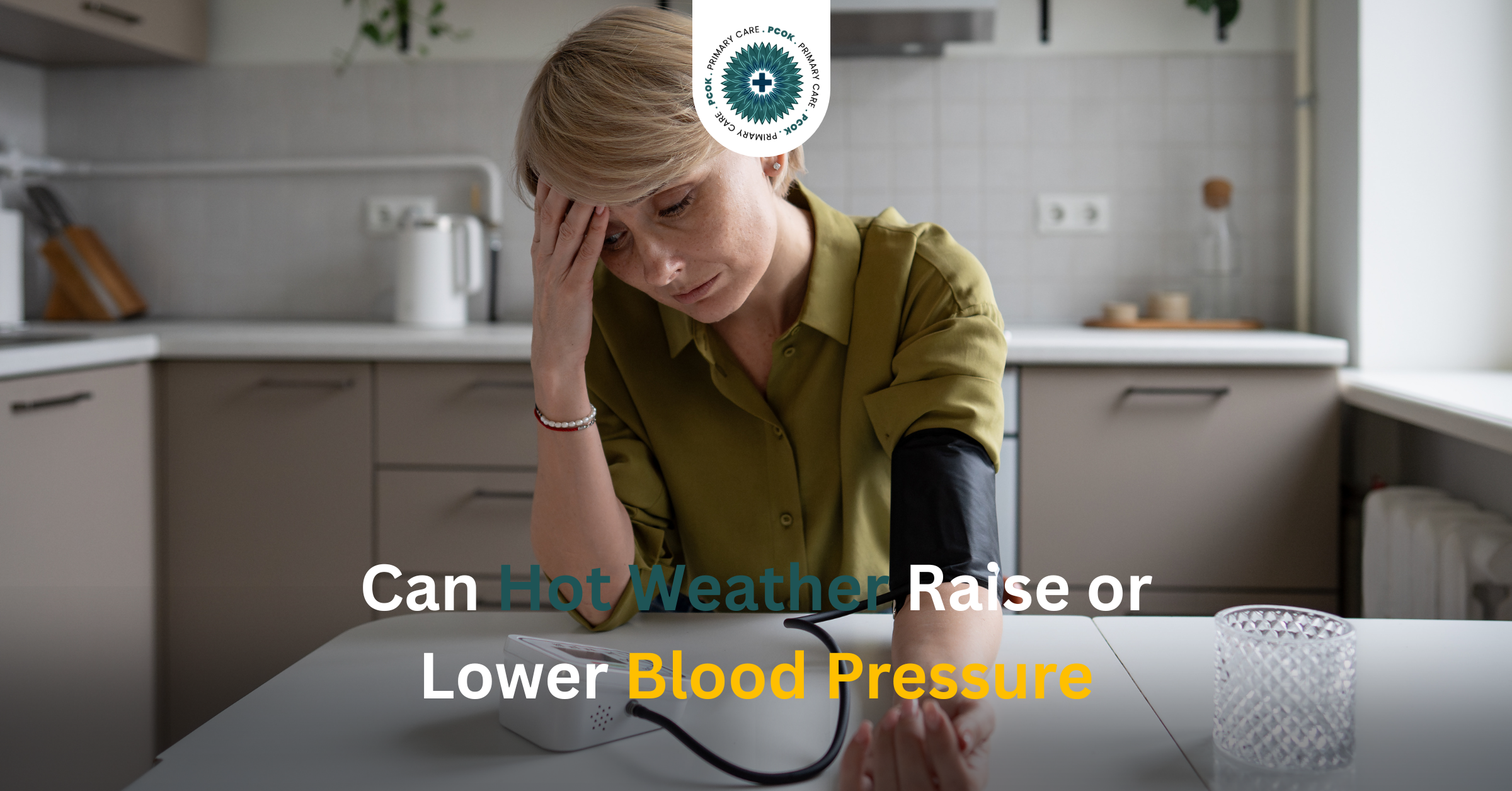
One of the lesser-known impacts of high temperatures is on blood pressure. You might notice some symptoms, such as weakness, dizziness, or fatigue, during hot weather. The changes are not “random”; instead, temperature can actually impact the function of your heart and blood vessels.
We’ll discuss the effects hot temperatures have on blood pressure, who is most susceptible, signs to look out for, and how to stay healthy during Kansas summers.
Quick Answer: Does the Heat Increase or Decrease Blood Pressure?
Hot weather can do both.
Generally, blood vessels dilate (get wider) when exposed to hot temperatures, which would decrease blood pressure. But dehydration, heavy sweating, heat exhaustion, and stress to the heart can also cause blood pressure to change or rise higher, even briefly.
These changes are particularly important for people who have high blood pressure, heart disease, diabetes, or are elderly.
How Hot Weather Affects Blood Pressure
As temperatures increase, your body has more to do to maintain its temperature. This is achieved, among the major mechanisms, through a pathway of increased blood flow to the skin surface and by dilating blood vessels to allow increased blood flow.
This can lead to:
• Lower blood pressure
• Faster heart rate
• Increased sweating
• Particularly, loss of fluids and electrolytes
Without adequate fluids, dehydration may be experienced. This causes less blood to flow and may create symptoms such as dizziness or weakness due to difficulty with blood flow through the heart.
Read more: How Does Dehydration Affect Blood Pressure?
Can Heat Raise Blood Pressure?
Yes, heat often lowers the blood pressure, but at times, it can actually raise it indirectly.
Typically occurs when the:
• You become dehydrated
• Your body is under heat stress
• Physically active in high temperatures
• Develops heat exhaustion
In times of dehydration, the body could constrict blood flow and secrete stress hormones to keep the blood pumping. This can temporarily raise blood pressure.
These changes may be more obvious and even potentially harmful for those with an existing heart disease.
Why Kansas Summers Can Be Hard on Blood Pressure
Kansas summers have been characterized by high humidity, temperature, and outdoor time. Many people in Gardner and neighboring communities engage in some form of activity involving the outdoors, gardening, sports, and families.
But, after long-term heat exposure, you will experience:
• Faster dehydration
• Electrolyte imbalance
• Increased heart workload
• Blood pressure instability
Heat Wave exposure may be particularly dangerous for older people and those with underlying medical conditions.
Signs That Heat Is Affecting Your Blood Pressure
The rise or fall of blood pressure as a result of heat may not be apparent. Rather, your body can indicate warnings; however, these include:
• Dizziness or lightheadedness
• Fatigue or weakness
• Rapid heartbeat
• Excessive thirst
• Blurred concentration
• Rapid changes in blood pressure that cause fainting or almost fainting
If these symptoms occur frequently during hot weather, it may be related to blood pressure changes or dehydration.
Who Is Most at Risk During Hot Weather?
Some individuals have a higher sensitivity to change in blood pressure due to heat:
• Adults over 65
• People with high blood pressure (hypertension)
• Those suffering from heart disease.
• Patients with diabetes
• Those who are on blood pressure medications or diuretics
• Outdoor workers
• Highly athletic people or active individuals
For those in the following categories, extra precautions may apply to your health in the summer.
Why People with High Blood Pressure Should Be Careful
Hot weather can impact the way that your body reacts to meds and fluid in the case of hypertension.
Medications for high blood pressure might:
• Increase fluid loss
• Affect electrolyte balance
• Reduce heat tolerance
This can make you more likely to have dizziness, dehydration, or a sudden drop or rise in blood pressure.
Do NOT discontinue medications during hot weather, but be sure to discuss medication concerns with your health provider.
When Should You See a Doctor?
If you develop:
• Dizziness in warm weather frequently
• Chest pain or pressure
• Shortness of breath
• Fainting episodes
• Irregular heartbeat
• Hypotension or hypertension with sudden increase and decrease or abnormal increases in B.P
Changes such as these should never be dismissed, particularly in extreme heat and cold.
Tips for Protecting Blood Pressure During Summer
With a few simple practices, you can minimize risks:
Stay Hydrated
Consume drinks at regular intervals throughout the day (even if not thirsty).
Avoid Peak Heat Hours
Avoid going outside during the peak times of the day (between 10 am & 4 pm).
Wear Appropriate Clothing
Get dressed in light, airy, and not dark colors when it is sunny.
Take Breaks in Cool Areas
In an area where feasible, stay in shaded or air-conditioned areas.
Monitor Your Blood Pressure
Regular checks will alert you to changes in time.
Limit Alcohol and Excess Caffeine
Both can be a cause of dehydration.
Why Regular Blood Pressure Checks Matter
Until blood pressure gets bad, it may not be possible to tell if it has changed. This is why there is a need for maintenance care.
Scheduled checkups with one’s primary health-care worker aid:
• Monitor blood pressure over time
• Make adjustments in medications as necessary
• Recognize risk factors for heart disease at an early stage
• Protect against problems such as stroke or heart attack
• Support overall wellness
Special emphasis must be placed on preventive care, particularly in the summer heat periods when there are heat waves.
Conclusion
So, can hot weather raise or lower blood pressure? The answer is both.
When it’s hot, the blood vessels tend to dilate, which lowers blood pressure. Dehydration and heat stress can cause fluctuations or increased pressure to occur at any point.
It’s all about awareness and prevention. During the summer months, your heart can be protected by drinking ample amounts of water, avoiding extreme temperatures, and keeping an eye out for symptoms.
If dizziness, tiredness, or blood pressure fluctuations occur during hot and humid periods, it’s time to check up.
Dr. Saboor Rashid and Primary Care of Kansas in Gardner offer customized preventive care for managing blood pressure, heart health, and chronic illness. We want to help you remain safe and healthy throughout the year, particularly during extreme weather.
FAQs
Does hot weather lower blood pressure?
Yes. Heat causes blood vessels to widen, which can lower blood pressure in many people.
Can dehydration cause high blood pressure?
Yes, in some cases, dehydration can cause temporary increases as the body compensates.
Can blood pressure medication affect heat tolerance?
Yes, some medications can increase sensitivity to heat and dehydration.
What is the best way to stay safe in hot weather?
Hydration, avoiding peak heat, and regular medical checkups are key to staying safe.

No comment