
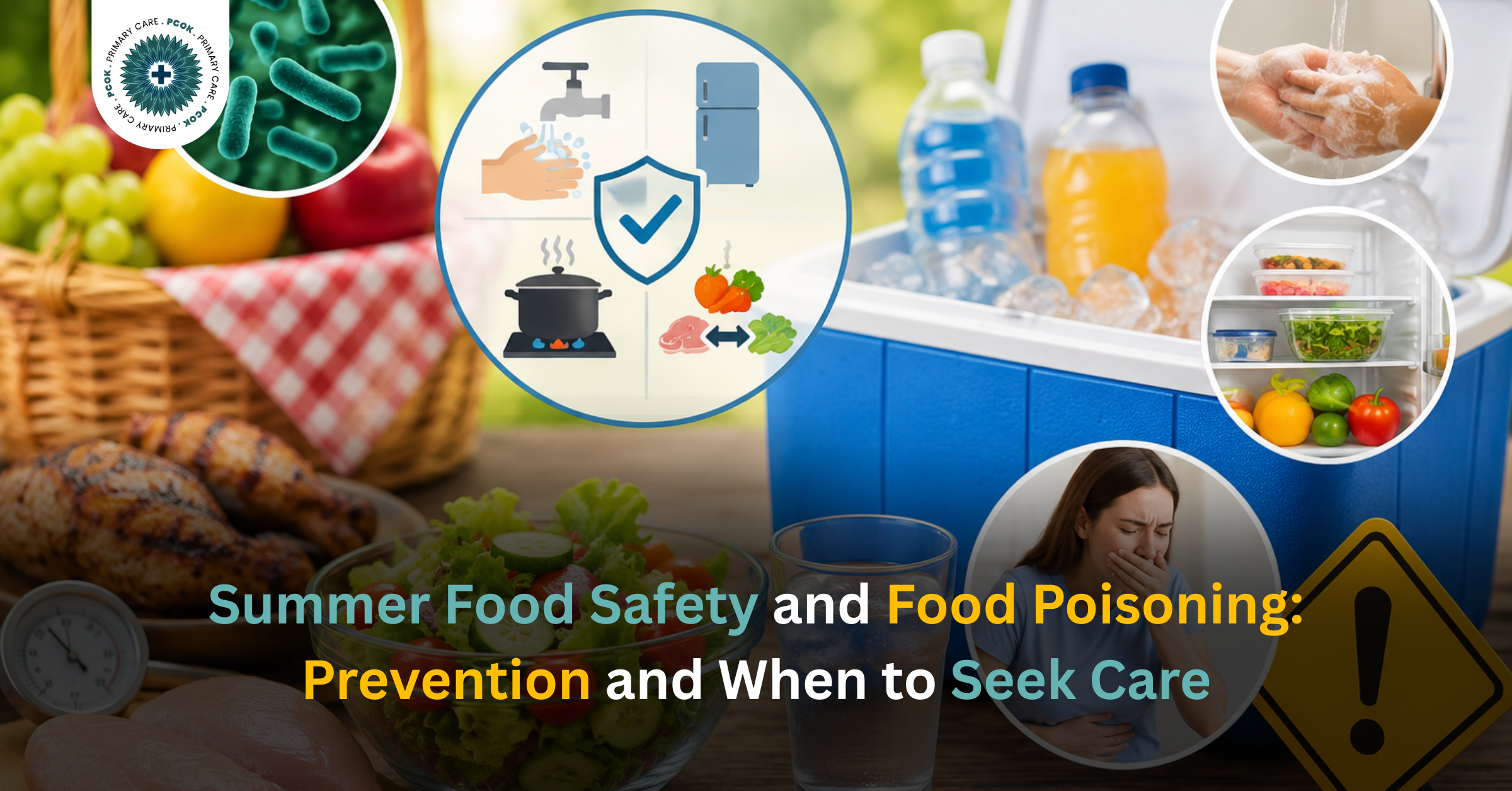
Summer is the time for cookouts, picnics, and family gatherings, but with the heat comes a greater risk of foodborne illness. At Primary Care of Kansas, we see many preventable instances each summer. In this post, you will learn tips on how to keep food safe, indicators of food poisoning, and when to seek medical care so you may enjoy the season confidently.
Why Food Safety Risks Increase in Summer
The warm weather makes it easy for bacteria and other germs to reproduce fast. Food left out at picnics, backyard barbecues, or even in a hot automobile can become breeding grounds faster than you think.
Outdoor activities frequently imply more grilled meats, mayonnaise-based salads, fresh produce, and dairy products that require careful temperature control. Children, elderly individuals, pregnant women, and persons with compromised immune systems are at increased risk of getting sick or having more severe symptoms. By understanding these seasonal trends, we can get ahead of the curve instead of chasing it.
Common Causes and How Food Poisoning Develops
Food poisoning, also known as foodborne illness, occurs when you consume or drink something that has been contaminated with hazardous bacteria, viruses, parasites, or toxins. Common culprits in the summer include undercooked meats (particularly ground beef and chicken), unwashed produce, meals left in the “danger zone” between 40- and 140-degrees Fahrenheit for too long, and cross-contamination from raw juices touching ready-to-eat items.
Symptoms typically emerge from hours to a few days after ingesting the contaminated meal. You may feel nausea, vomiting, diarrhea, stomach cramps, or a moderate fever. Many cases can resolve without treatment, but the dehydration that can occur with vomiting and diarrhea is usually the largest concern, especially with young children or elderly relatives.
Smart Prevention Strategies: Your Best Defense
The cornerstone of summer food safety is built on four simple rules that health professionals repeatedly recommend: keep things clean, keep raw and cooked foods separate, heat to safe temperatures, and chill rapidly. Let’s break them down with actionable tips you can implement now.
Keep Clean: Hands, Surfaces, and Utensils
First, wash your hands with warm water and soap for at least 20 seconds, especially after handling raw foods, using the toilet, or contacting animals. Wash all surfaces, cutting boards, and cutlery before and after each use.
Hand sanitizer or wipes are a backup, but they work better on clean hands, not a replacement for a proper wash. Even if you plan to peel them, rinse fresh fruits and vegetables under running water, as bacteria can migrate from the surface to the inside during cutting.
Separate to Prevent Cross-Contamination
Raw meat, poultry, fish, and their liquids can readily contaminate salads, buns, or fruits with bacteria. Use separate chopping boards and plates, one for raw proteins and one for ready-to-eat items. Store uncooked goods in sealed containers at the bottom of your cooler or refrigerator so juices don’t spill on other things.
Keep a clean dish at the grill for cooked meals rather than reusing the one that held raw meat. These little practices help to keep infection from ever getting started.
Cook Foods Thoroughly
Color doesn’t tell you whether food is safe. Use a food thermometer to check internal temperatures, particularly for ground meats, poultry, and leftovers. Grilling is a favorite for summer, but thicker slices or packed burgers need extra care to make sure they are cooked through to safe temperatures.
If you’re warming up casseroles or side dishes, make sure they’re steaming hot throughout. This procedure kills off a lot of the germs that like warmer conditions.
Chill Promptly and Properly
Keep hot items hot and cold foods cold until served. Avoid leaving perishables out longer than required, especially when the temperature is above 90°F, which reduces the safe window.
Use lots of ice packs in your cooler and keep the lid closed as much as you can. Put leftovers in the refrigerator within 2 hours (1 hour if it is hot). Be sure your refrigerator at home is set at 40°F or lower and check it periodically using a thermometer.
Here are other summer-specific tips:
- Make smaller amounts of food for gatherings to reduce the chance of leftovers sitting out at room temperature.
- Not eating anything homemade or store-bought that has mayo or dairy in it if you can’t keep it sufficiently cold.
- Keeping liquids and non-perishable foods apart from cold foods to maintain a cool temperature.
What to Do If Food Poisoning Symptoms Appear
Most mild instances resolve with rest and careful attention to water. First, concentrate on restoring fluids lost from vomiting or diarrhea. Often, water, sports drinks, or caffeinated beverages are not better than water, oral rehydration treatments made for this purpose, and clear broths.
Once you can keep liquids down, try bland foods such as bread, rice, bananas, or applesauce. Avoid dairy, spicy foods, alcohol, and high-fat foods until your stomach settles. Get plenty of rest and watch your symptoms closely.
When to Seek Medical Care
Most people recuperate at home, but other conditions need a medical evaluation. Call a doctor if you have signs of dehydration (dizziness, a dry mouth, less pee, or being very thirsty), a high or continuing fever, blood in the stool, very bad stomach discomfort, or if your symptoms linger longer than a couple of days.
Young children, older adults, pregnant women, or those with chronic problems are advised to seek prompt medical attention. Primary Care of Kansas can evaluate your symptoms, give supportive care, including hydration support when needed, and make sure nothing more serious is brewing. Getting treated early usually results in faster recovery and avoids complications.
Enjoy Summer with Confidence
Summer should be about creating memories with family and friends, not worrying about food safety. By practicing good prevention practices and knowing how to react if problems develop, you can dramatically lower the risks and focus on what matters most.
Primary Care of Kansas in Gardner is here to help you keep healthy throughout the year. Our staff offers compassionate, comprehensive support whether you need routine preventative care, help with an acute illness, or specialized advice for your family.
FAQs
How long does food poisoning usually linger?
Most mild instances of COVID-19 will improve in 24 to 48 hours with rest and fluids, while some of the symptoms may remain a little longer.
Can food poisoning be avoided altogether?
While you can’t prevent every case, basic food safety precautions can go a long way in reducing your risk, especially in the summer.
When do I need to bring my child in for food poisoning symptoms?
Contact us sooner if your kid is showing signs of dehydration, has a high fever, bloody diarrhea, or is unable to keep fluids down.
Do I need antibiotics for food poisoning?
In most cases, it is viral or toxin-mediated, and antibiotics are not needed. We take each scenario on its own merits to determine how best to move forward.

No comment